
April 2025 took me to Hong Kong, where I had the incredible opportunity to deliver two lectures that sparked thought-provoking discussions and deepened my own understanding of exemplarist ethics. These talks, one for my friend Professor Carl Hildebrand’s Common Core course and the other at the HKU Medical School, offered unique insights into the way moral exemplars shape our ethical frameworks and professional practices.
Lecture 1 // “Relating to Our Role Models: On Personal Ideals and Moral Exemplars”
The first lecture was part of Carl’s “Love, Morality, and the Meaning of Human Relationships” course, a Common Core class at HKU. Over the course of two hours, I explored the psychology and ethics of role modelling, diving into how individuals admire and emulate moral exemplars—those whose lives embody what is good or right. I shared findings from my ongoing Gen Z study, which examines how younger generations relate to religious and spiritual role models in today’s evolving landscape.
One of the most fascinating aspects of this session was the live poll I conducted with the students, asking them which story-type from the Gen Z study resonated most with them. To my surprise, the Self-help Narrative emerged as the overwhelming favorite. This was particularly unexpected, as the Self-help Narrative had one of the lowest counts in my original global sample. The results sparked a lively discussion about generational shifts in values and how individuals seek role models and moral guidance in different ways.
I’m incredibly thankful to Carl for designing such an engaging and thought-provoking course and for inviting me to contribute. The students’ enthusiasm and insightful reflections made this a truly memorable experience.

Lecture 2 // “Towards an Exemplarist Medical Ethics”
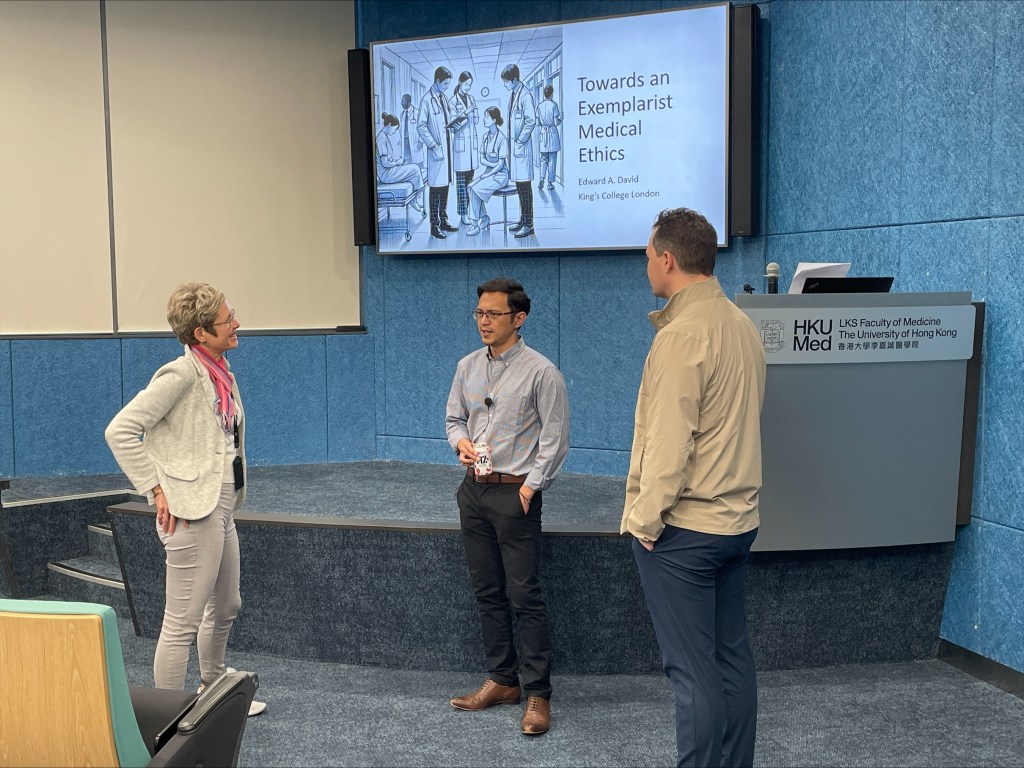
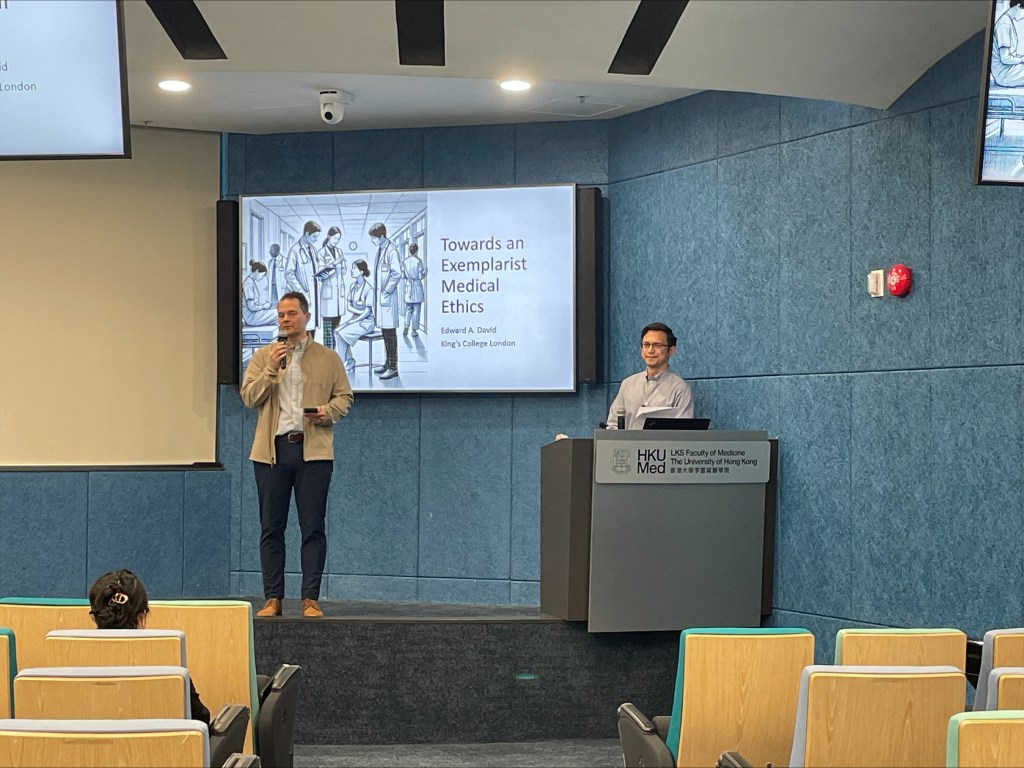
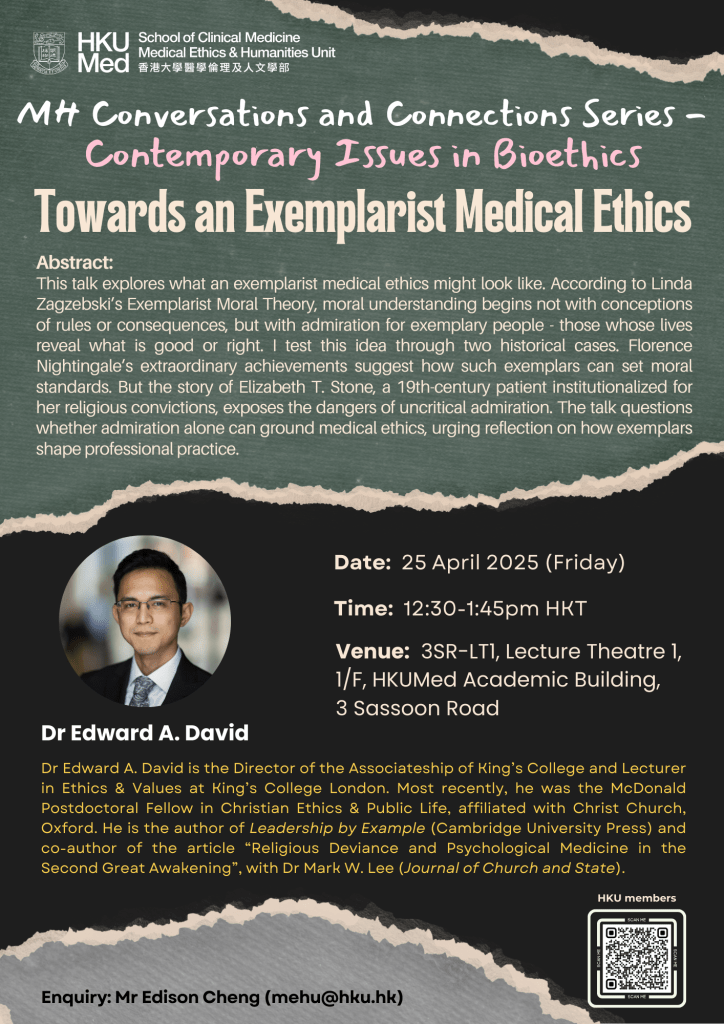
The second lecture, also at Carl’s invitation, took place at the HKU Medical School. This talk focused on exemplarist medical ethics, drawing from Linda Zagzebski’s Exemplarist Moral Theory. The central thesis of my talk was that moral understanding in healthcare should begin not with rules or consequences, but with admiration for exemplary individuals—those whose lives show us what is good or right. To explore this, I looked at two historical figures: Florence Nightingale, whose monumental achievements in nursing set a high moral standard, and Elizabeth T. Stone, a 19th-century patient institutionalized for her religious beliefs, whose story highlights the potential dangers of uncritical admiration.
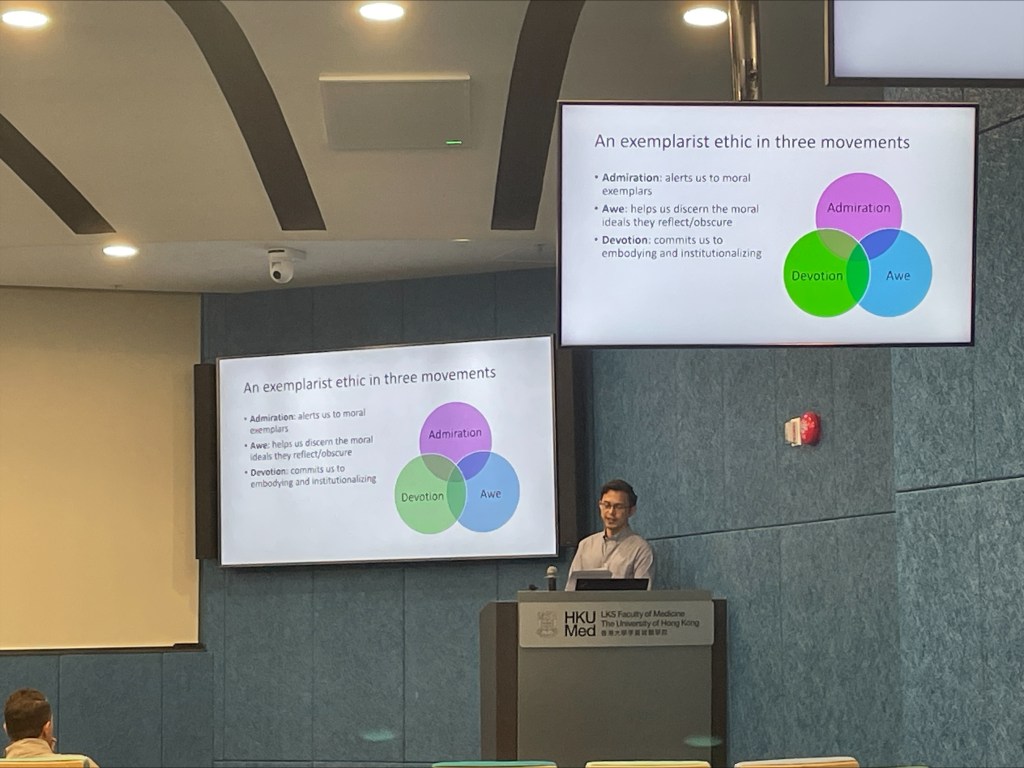
I designed this talk with built-in reflection and discussion questions, encouraging attendees to reflect on their own role models, both admired and contentious. We also discussed the powerful emotions of awe and devotion—emotions I believe should play a key role in any exemplarist approach to medical ethics. The responses were rich and insightful, particularly in relation to how these emotions influence medical practice, from admiration for figures like Nightingale to more complex emotions associated with controversial figures like Stone.
I’m deeply grateful for the opportunity to deliver this lecture at the HKU Medical School, where the discussion around moral exemplars and their role in medical ethics was both engaging and intellectually enriching.
Thank You!
A special thank you to Professor Carl Hildebrand for inviting me to speak at both his course and at the HKU Medical School. I also want to extend my gratitude to Edison and Fran of the Medical Humanities Unit for their excellent logistical support throughout my visit. It was a pleasure to meet and engage with the students and staff from both HKU and Hong Kong Baptist University, and I look forward to continuing these discussions in the future.

 Edward A. David
Leave a reply to hgwani Cancel reply