

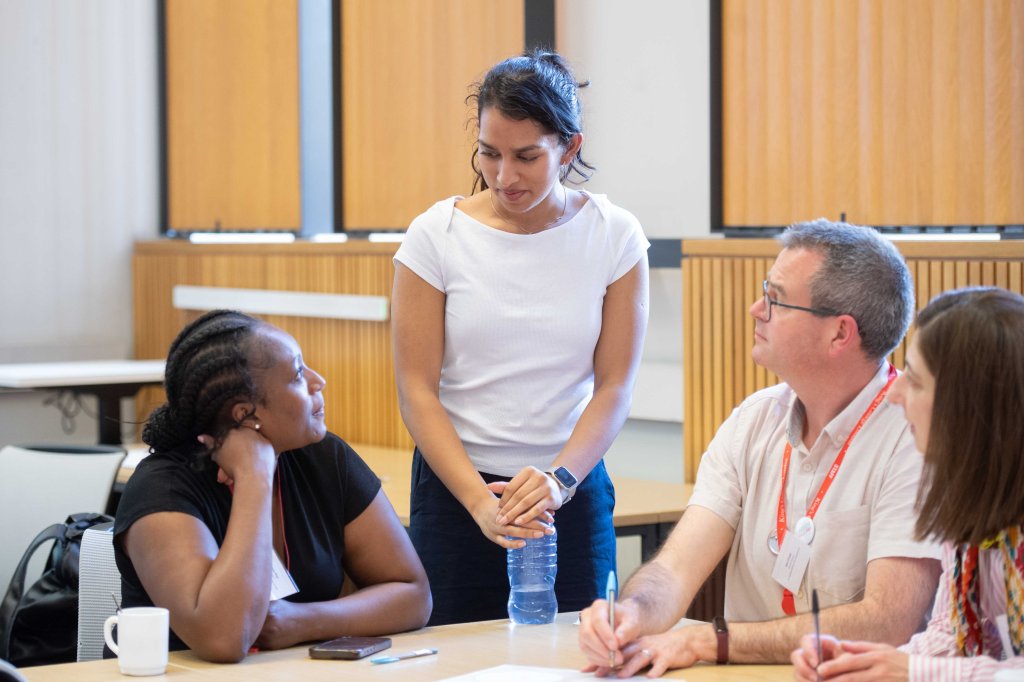
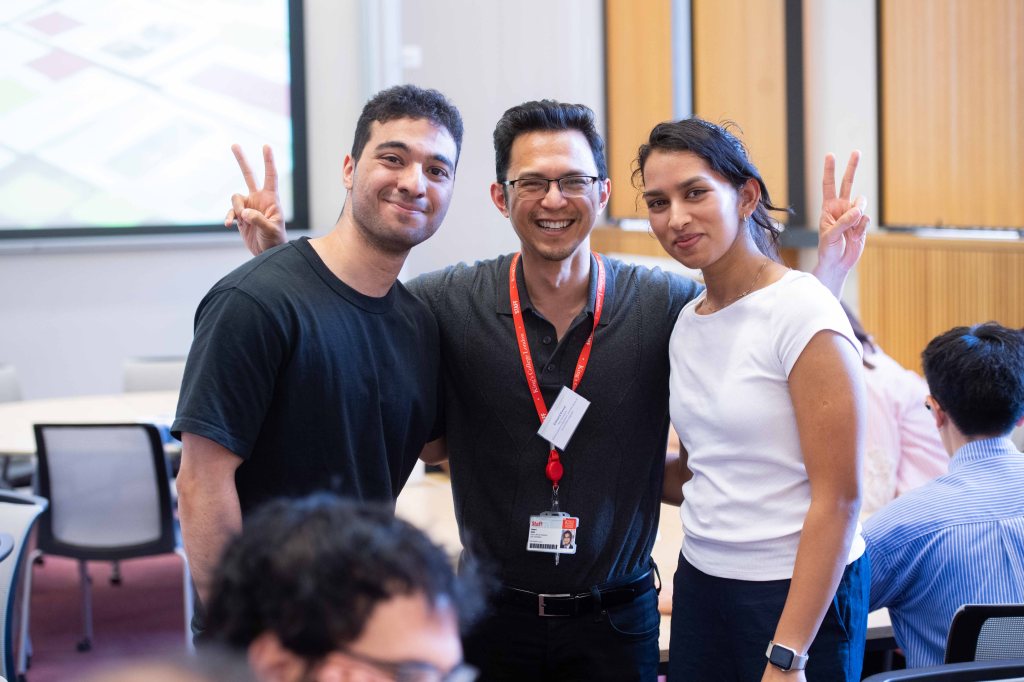
Two of my second year undergrads, Suranne and Doruk, facilitated a workshop at the King’s Education Conference last month. We showcased how to use an entrepreneurial tool within a Theology and Religious Studies class to help embed careers-and-employability learning into a humanities module. Full abstract below. Huge thanks to the conference organisers for accepting our application to present. It was a privilege for us to be there.

Title: Embedding Employability in the Humanities: Using Entrepreneurship and AI Tools to Translate Learning into Career Readiness
Abstract: This workshop shares learnings from an undergraduate module, Global Leaders and Innovators (GLI), in the Department of Theology and Religious Studies, which integrates careers education into a humanities curriculum. Through GLI, students engage with two entrepreneurship tools: (1) the Customer Value Proposition Canvas, through which students articulate the purpose and value of a product or service; and (2) ChatGPT, specifically when used for executing a competitor analysis between different companies. These tools help students connect disciplinary learning—including critical reasoning and ethical analysis—to real-world professional contexts.
This session will offer participants the opportunity to try out these tools themselves. Through guided, hands-on activities, attendees will explore how these tools can be adapted to their own teaching contexts, without compromising disciplinary depth. A central feature of the workshop is the co-facilitation by two undergraduate students who have taken GLI. They will support participants in using the tools and offer brief reflections on their experience. In particular, they will demonstrate how these approaches draw out distinctive strengths of a humanities education and how those strengths equip students to engage confidently in an AI-enabled workforce.
Positioned within the ‘Future of Teaching and Learning’ stream, the session proposes an innovative way to embed employability within a humanities programme, whilst being grounded in student experience and responsive to technological change.


Leave a comment